Carrying pūrākau into the landscape: designing with people, place, and purpose
26 March 2026
SHARE


Yoko Tanaka reflects on weaving tikanga-based approaches into Boffa Miskell's design process: grounded in place, shaped by people, and strengthened through collaboration.
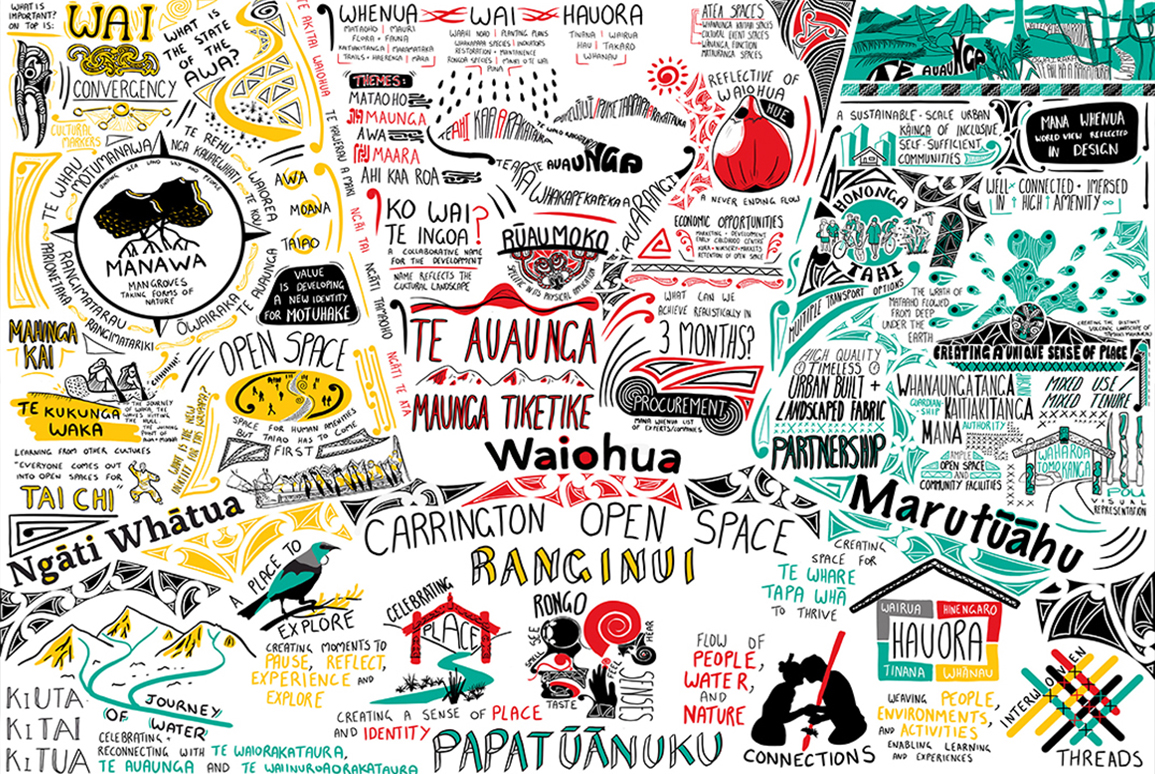
At Boffa Miskell, our Landscape Architecture team views design as more than an outcome. Rather, it is a process shaped through listening, collaboration, and cultural understanding. The monthly Design Assembly brings our team of landscape architects together digitally, across the country, to share knowledge and challenge our thinking, which continually refines how we design. This wānanga reflects the strength of our design outcomes and the depth of thought behind them.
Last month, Cultural Design was the key theme. We explored Te Whakawhitinga – our cultural design framework – and its role in our everyday design practise. It is part of our fundamental approach to landscape architecture in Aotearoa. By using the Te Whakawhitinga framework, we are able to build a shared foundational understanding of engagement across all regions, while recognising that each place, each iwi, and each relationship is unique.
We explored cultural design in practice discussing the successes, challenges, process and lessons across five projects. Some presenters elaborated on how tikanga-based approaches are woven into our design process, and others explored how we interpret pūrākau into spatial and physical outcomes. Across projects such as Te Kukūnga Waka | Carrington Development, Puhi Kai Iti | Cook Landing, Kopurererua Valley, Arowhenua Reserve, and the Sylvia Park IKEA Development, we reflected on the role we play, supporting meaningful engagement while translating cultural narratives into built form.

What stands out in our work is not only the cultural engagement itself, but how we carry those narratives and pūrākau through our design in the materials we choose, the details we resolve, and the experiences we create. This is where people can truly connect with place and history. We also reflected on lessons learned. Engagement is never linear, and not all conversations are design-led. A successful outcome requires clarity around roles, consistency in communication, and a deep respect for the expertise that mana whenua and artists bring. Sometimes it’s just about holding space for our collaborators. Above all, it requires time and the recognition that relationships are not just part of the process, but key outcomes in themselves.
As a national practice, we continue to grow and actively evolve our collective capability in this space by frequently sharing experiences, continuing to learn from each other, and striving to maintain a consistent level of cultural understanding across our teams.
This is how we design: grounded in place, shaped by people, and strengthened through collaboration.
He aha te mea nui o te ao?
He tāngata, he tāngata, he tāngata.
What is the most important thing in the world?
It is the people, it is the people, it is the people.