Designing for Biodiversity at Whakaraupō: Artificial Tide Pools at Lyttelton Port
26 June 2026
SHARE


Boffa Miskell partnered with Lyttelton Port Company to design, deliver, and monitor artificial tide pools retrofitted into an existing rock revetment. This practical, low-tech eco-engineering intervention can enhance marine biodiversity in working coastal infrastructure, creating habitat for a wider range of marine species within the intertidal zone.
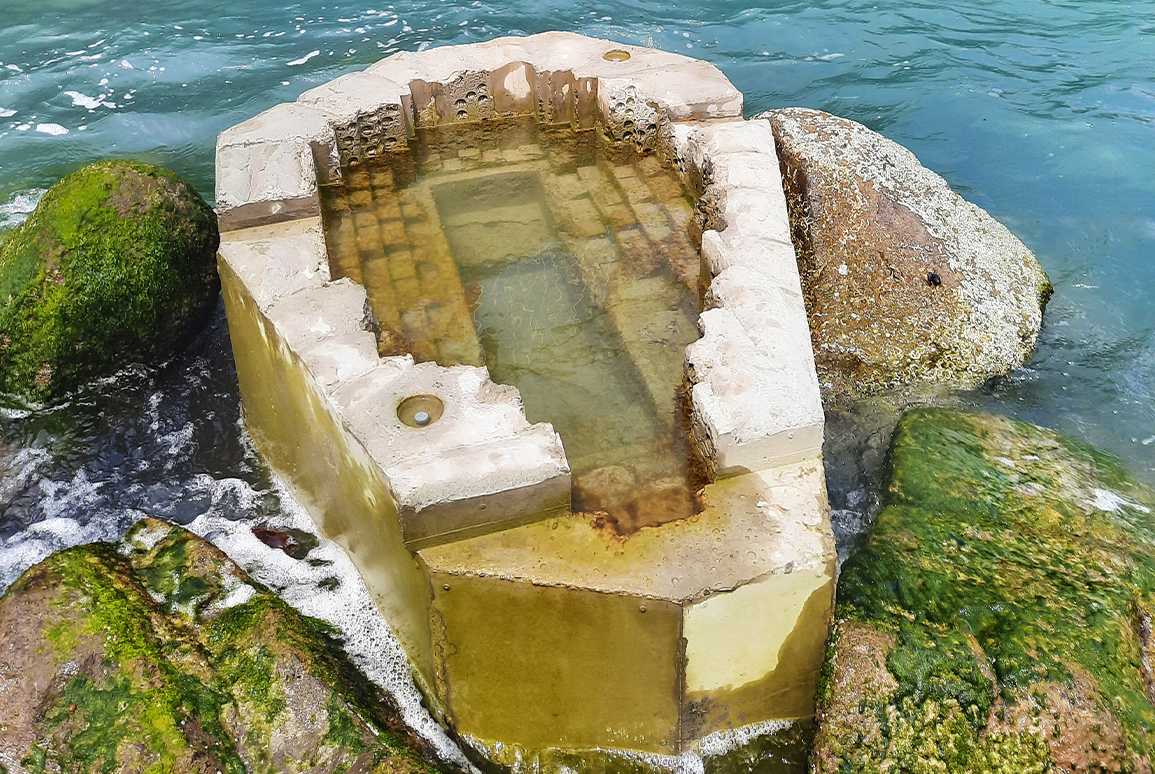
Structures found in port areas worldwide, such as revetments and seawalls, offer limited ecological value; particularly in the area exposed at low tide, because they rarely offer the sheltered, water-retaining habitat needed by a broader range of marine life.
Three years ago, Boffa Miskell and Lyttelton Port Company set out to test whether that could change. An eco-engineering trial of artificial tide pools was proposed: the pools were designed to hold water at low tide and create a more complex habitat within an otherwise engineered coastal edge.
“The idea was straightforward, but the design response needed to be carefully considered,” says landscape architect Gabe Ross. “The pools needed to work ecologically, fit within an existing rock structure, and be simple enough to fabricate in-house using readily available materials and surplus concrete from other port projects.”
Boffa Miskell landscape architects collaborated with marine ecologists and engineers, and the final design was an elliptical concrete unit with an internal basin holding about 140 litres of water. Rather than creating a smooth basin, the design deliberately introduced surface complexity. Inside each pool, a series of ledges, vertical faces, recesses and textures was formed to mimic the complexity of natural rock pools. All these features create microhabitats: tiny variations in surface shape and shelter that give different small organisms places to settle, feed or avoid drying out.
“Retaining a large volume of water at low tide and offering habitat complexity were key aspects to attract a wide arrange of marine organisms such as seaweeds, mussels, oysters, sea squirts, and small mobile animals that are uncommon on the plain boulder habitat of the revetment” says marine ecologist Tommaso Alestra.
The fabrication process reflected the same emphasis on practicality. One simple mould was built using spare timber and plywood available at a local workshop, with internal forms arranged to create the pools stepped and textured interiors. Surface texture was increased using bubble wrap and biodegradable elements, such as pieces of algal and plant material, that left voids and irregularities in the concrete as they broke down.
“This was intentionally low-tech and demonstrated that marine habitat enhancement does not always require proprietary products or specialist casting facilities,” says Gabe. “With careful design, standard materials and a bit of Kiwi ingenuity, we showed it was possible to produce marine artificial habitats in relatively simple and affordable manner.

Four pools were installed in November 2023 at the Lyttelton Port cruise berth revetment. This site was selected following an inspection throughout the port because it has a relatively gentle slope and is well-exposed to waves and currents, which were expected to increase the supply of spores and larvae, and prevent excessive sediment accumulation. In addition, diverse benthic communities were observed in the subtidal portion of the revetment. Although few species colonise the intertidal zone, the biodiversity observed in the subtidal was considered indicative of good potential for species to colonise the pools over time.
Following the installation of the pools, the project moved into a two-year monitoring programme.
“We undertook surveys every six months for two years after the installation,” says Tommaso. “These surveys compared the communities developing inside the pools with those on the adjacent revetment boulders. We recorded abundance and composition for attached organisms such as algae and sessile invertebrates, as well as for mobile species such as crabs, snails and fish.”
Within six months, the artificial tide pools were already supporting levels of diversity comparable to the surrounding revetment. After two years, the number of taxa recorded in the pools had approximately doubled relative to the adjacent rock surfaces.
Just as importantly, the pools did not simply support “more of the same”. They developed distinct communities, including many organisms that were absent from the surrounding revetment habitat. This meant the pools were not only increasing abundance of marine life, but also allowing attracting a wider range of species.
“Over time the internal basin of the pools increasingly resembled the subtidal habitat found on the submerged portion of the revetment, rather than the bare boulder habitat all around them at low tide,” says Tommaso. “Early colonisation was dominated by fast-growing filamentous algae. This is the fine, thread-like seaweed; but then we began to see to a more varied mix of green, red and brown algae.”

Among the more notable algae were recruits of Sargassum sinclairii, a native habitat-forming brown seaweed; and Hormosira banksii, the common ‘Neptune’s Necklace’ found on many New Zealand rocky shores.
“The pools also supported a wider variety of sessile invertebrates. These are the small marine animals that attach to a surface rather than moving around as adults. These included ascidians, commonly known as sea squirts; bryozoans, often called moss animals because of their fine colonial growth; and bivalves such as mussels and oysters,” Tommaso continues.
Mobile fauna also became more common over time. Crabs, glass shrimp, chitons, grazing snails and small triplefin fish used the pools for shelter and feeding.
“High sediment loads in the waters of Whakaraupō | Lyttelton Harbour are a challenge to marine life, and we did not know how sediment accumulation would have affected biodiversity inside the pools,” says Tommaso. “Sediment accumulated in the deepest parts of the pools and on some of the horizontal ledges, but not to the extent that it prevented colonisation. In fact, the monitoring results showed that there was sufficient sediment-free space and enough diversity of microhabitats for a wide range of species to establish successfully.”
The project also reinforced an important truth about ecological enhancement in ports: improved habitat does not benefit native species alone. Some non-native and invasive organisms, including the Asian kelp Undaria Pinnatifida and the clubbed ascidian Styela clava were found in the pools. However, their presence did not prevent recruitment and growth of a diverse suite of native species. The recommendation from the monitoring programme is not to avoid enhancement, but to pair it with ongoing observation and, where needed, selective pest management.
"We really valued the expertise of Tommaso and the Boffa Miskell team on the project," says Dr Crystal Lenky, Head of Environment & Sustainability at Lyttelton Port Company. "The outcomes have helped us to expand our ambitions for ecologically enhanced marine infrastructure."
The tide pool trial at Lyttelton Port shows how relatively simple but well-targeted interventions can produce meaningful ecological gains. By retaining water, increasing surface complexity and creating refuge within a harsh intertidal setting, the pools enabled the revetment to support species more typically associated with the adjacent subtidal habitat.
“For the landscape architects, this project was something different, and it was a fun creative exercise,” says Gabe Ross. “And it’s a strong example of design working across disciplines by combining the needs of marine ecology with ease of constructability."
“It also provides one of the first detailed New Zealand case studies of artificial tide pools as a marine biodiversity enhancement tool, and not every designer can say they get to do that,” he continues.
The monitoring programme carried out as part of the project is one of the first assessments of the performance of this kind of device in Aotearoa New Zealand and contributes to our growing experience with biodiversity enhancements within coastal infrastructures.

