eDNA: what it is and how it is used
10 August 2021
SHARE


A novel approach to surveying ecosystems has recently been developed and implemented both nationally and across the globe. Here’s a rundown on environmental DNA (eDNA).
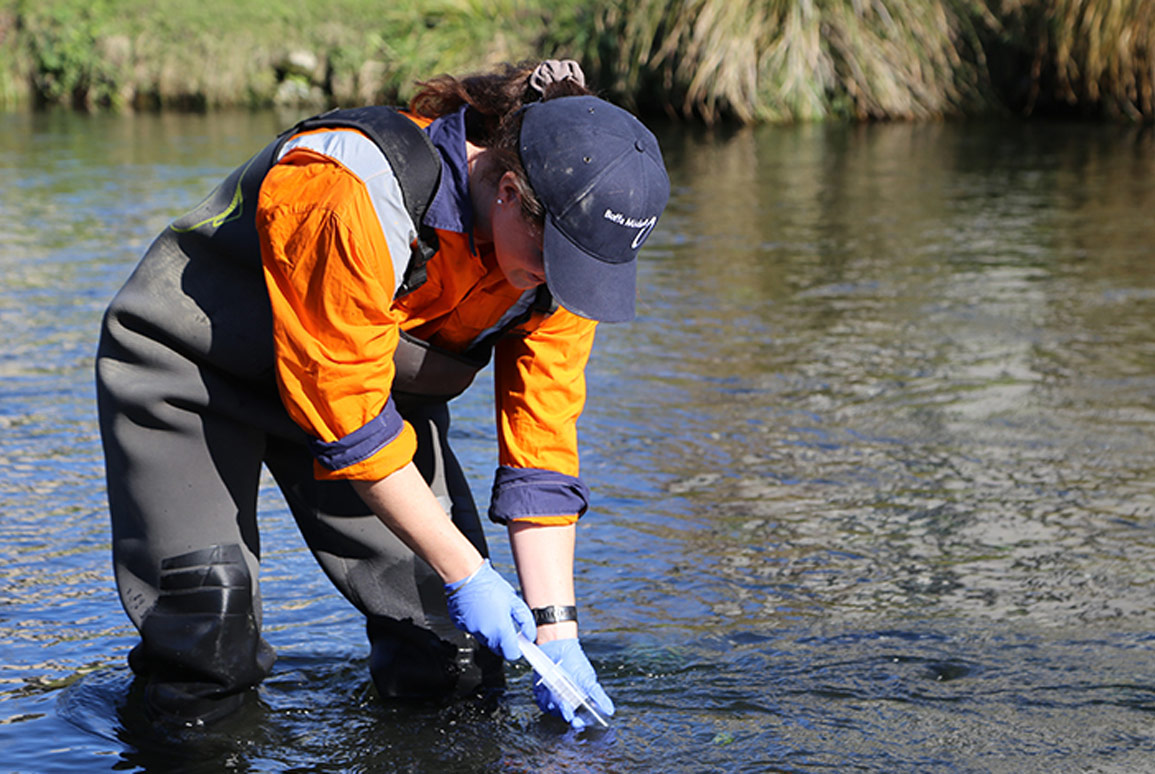
eDNA was originally developed and found highly effective for detecting unwanted organisms such as pest species like Undaria and koi carp. The use of eDNA has since expanded into identifying other fauna.
eDNA is genetic material that is shed from an organism while interacting with its environment. eDNA can come from many sources, such as the through the loss of skin, hair, scales, fluids and even through faeces that are suspended in the water column.
How is eDNA sampled?
Sampling eDNA is simple and cost effective and can be used to complement conventional survey methods where these may be limited for assessing the presence of species within an ecosystem.
Using a specialised testing kit, a water sample is collected and pushed through a special filter. A preservative is added, which means the sample does not need to be frozen or treated with any particular care. Using eDNA, ecologists can search for a single species, or can use the sample to detect a wide variety of different organisms. The use of this tool can be beneficial for locating species that are difficult to detect through standard methods, such as cryptic wetland birds, mudfish or Hochstetter’s frogs.
How can eDNA help you?
Using eDNA alongside standard freshwater sampling methods, we have detected the presence of several additional fish species that standard methodology failed to detect in previous work. This shows that using eDNA in field surveys in conjunction with standard methodology may provide a more comprehensive insight into all species within an environment, providing a clear picture of an ecosystem. eDNA will transform our understanding of ecosystems, how they are impacted, and lead to better ecosystem-based management.
For further information please contact Dr. Tanya Blakely