Exploring Architecture and Landscape Through 3D Models
26 June 2025
SHARE


A recent Objectspace Ōtautahi exhibition invited viewers to experience the conceptual power of architectural models. Two submissions by Landscape Architect Hamish Cochrane captured the integrated landscape approach behind Parakiore Recreation and Sport Centre.
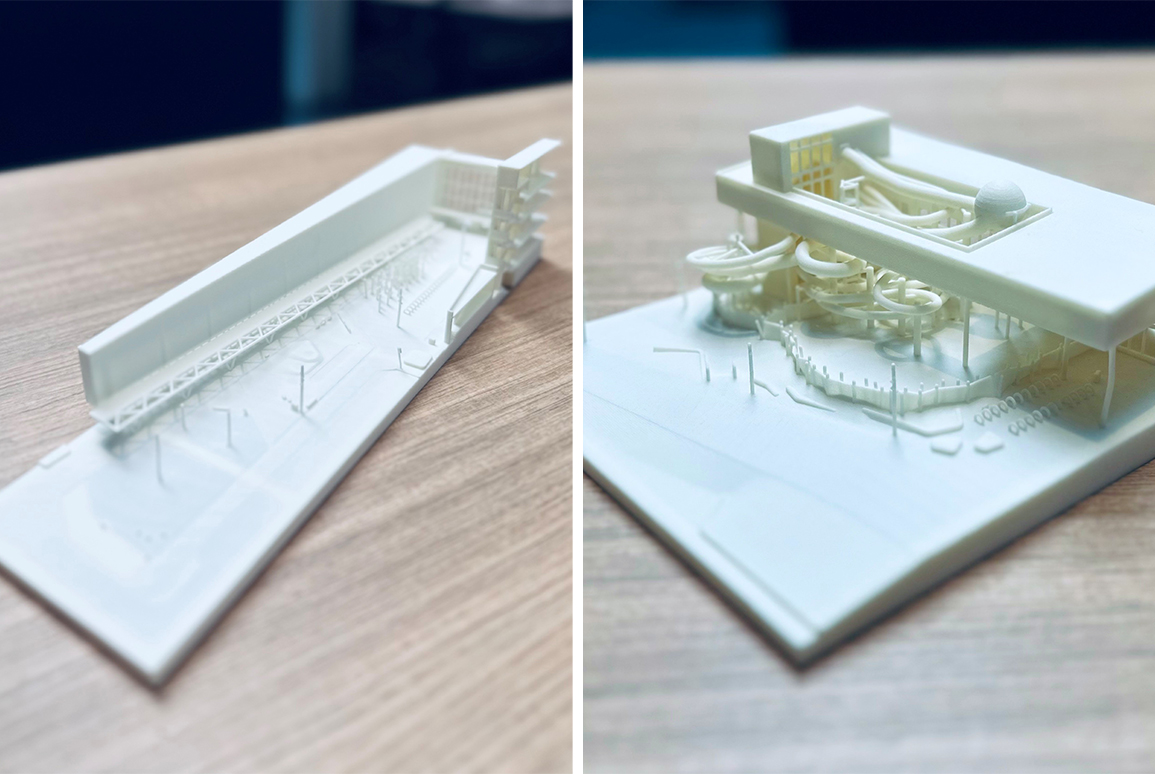
Objectspace Ōtautahi recently presented an exhibition that showcased architectural models of notable Canterbury projects. Objectspace is a public gallery dedicated to architecture, design, and craft, located in Auckland and Christchurch.
This exhibition explored models as both a creative tool and a means of communication. Audiences were invited to experience the craftsmanship and joy of scaled-down design through a range of approaches to model-making.
As part of the exhibition, Boffa Miskell Landscape Architect Hamish Cochrane contributed two 3D models of the Parakiore Recreation and Sport Centre, New Zealand’s largest aquatic and indoor recreation venue. These models illustrate the site’s design process and the deep integration between landscape and architecture using consistent colour and material to blur the lines between built form and environment.
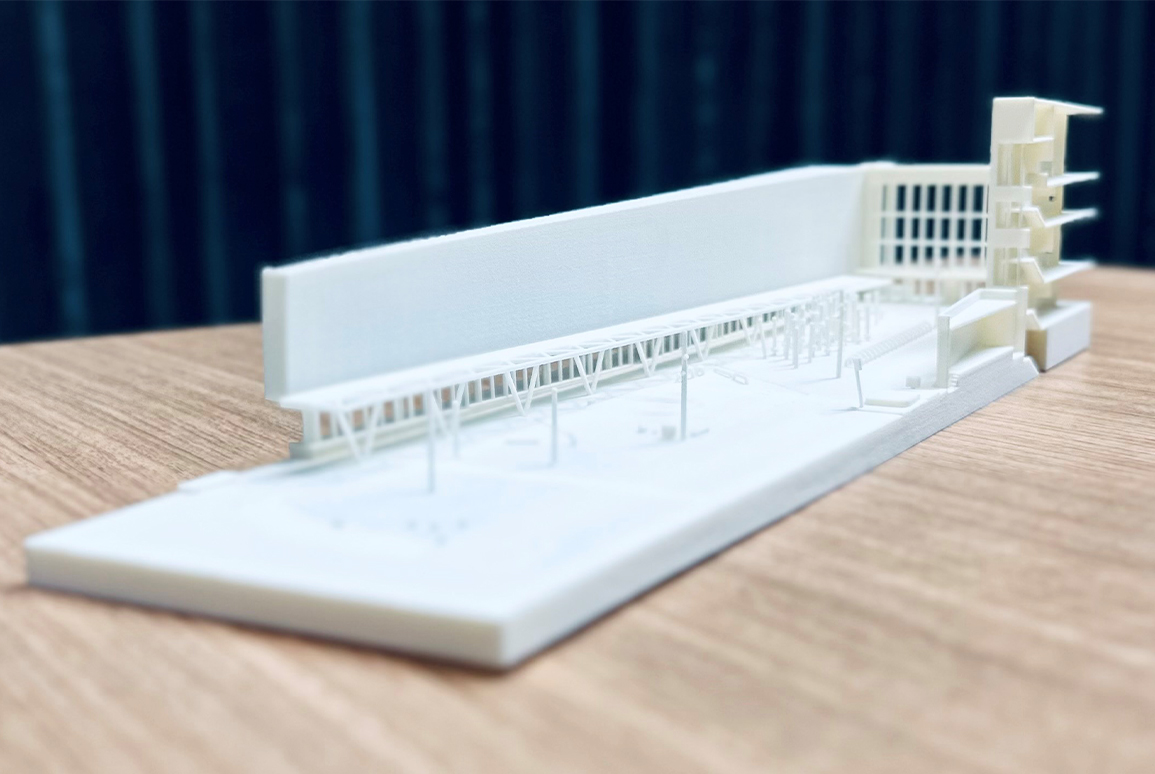
Southern Entrance Model
This model explores the relationship between built form, active play, and the surrounding landscape. The widening space between the buildings highlighted how framing elevated views to the Port Hills would influence the design approach of this space to prioritise openness and guide people toward these future sightlines. The design references the expansive tussock grasslands and volcanic terrain beyond, while creating a more grounded, human-scale experience through the lowered profile of the building.
A broad access ramp leads to a series of playful ‘activity islands’—landscape interventions that promote movement, health, and well-being for all ages. Positioned near the community courts, this southern space takes on a more active character, offering opportunities for warm-up, cool-down, or family arrival moments. The result is a welcoming, dynamic edge to the site that responds to both place and people.

Northern Entrance Model
This model highlights how cultural narrative and ecological systems are brought together through the hydroslide feature and raupō fence. Referencing the migration of tuna (eel) from the sea to inland waterways, the twisting slide form rises above the raupō-like structure, drawing on the dual influences of Tangaroa and Tāne. Together, these elements celebrate the movement of water across the site, physically and symbolically, linking landscape and play.
The hydroslide becomes a sculptural expression of water’s journey, while the raupō fence anchors the design in native wetland ecologies. Seeing the scale of built form against the wider landscape helped refine the spatial hierarchy, ensuring the architecture remains grounded within its cultural and ecological setting.
Transforming visualisation and communication
While digital modelling has transformed how we visualise and communicate design, there’s still something powerful about holding a concept in your hands. That tactile connection can spark new insights; we’re leaning into this with 3D printing.
Over the past few years, our landscape architects have integrated 3D printing into our workflow to bring projects to life at every scale. For the 30,000m² Parakiore Recreation and Sport Centre, we used 3D printing to assist in testing spatial relationships and refining design moves early on. Later, we printed mock-ups of street furniture to explore different shapes and forms, and even prototyped rope bindings for play elements at full scale - mould-ready for the manufacturer to cast into polyurethane climbing holds.
Other 3D printing projects include:
- Prototype pedestrian bridges for the Ōtakaro Avon River Corridor
- Contour tiles exploring how to reshape large mining tailings stockpiles to best fit natural landforms on areas several square kilometres in size.
- Monopoly-style housing blocks representing different building typologies and densities. These are used for community engagement events to help people visualise and test ideas for urban structure plans.
From concept to construction, 3D printing is helping us to think differently, test better, and connect more meaningfully with clients, communities, and collaborators.
