What is Carbon Logic? Understanding Carbon Smart Design at Boffa Miskell.
14 April 2026
Written by Summer Young
SHARE


Carbon Logic is a framework that helps Boffa Miskell designers make better, more responsible design decisions by considering carbon alongside environmental, cultural, and social outcomes. It was developed in 2022 by a group of Boffa Miskell designers, drawing on the expertise and best practice already embedded across the organisation.
Responding to climate change through design
Being a landscape architect requires constant learning, creative problem‑solving, and a close connection to place. Today, that responsibility feels even greater as we design for an Aotearoa New Zealand increasingly shaped by the impacts of climate change. Alongside this, expectations are growing. Clients, communities, and project teams want high‑quality outcomes that do not come at the expense of the environment.
Carbon Logic is Boffa Miskell’s way of responding to this challenge.
The aim was not simply to reduce emissions. It was to support the continued delivery of high‑quality landscapes that are meaningful, resilient, and grounded in place.
How Carbon Logic supports design decisions
The outcome is the Carbon Smart Design Guidelines, now used across Boffa Miskell projects. Together, Carbon Logic and the Guidelines support better assessment and decisions about carbon. The suite of resources includes guides to support conversations with clients and project teams about sustainability goals and how these can be reflected in design decisions.
The Carbon Smart Design Guidelines support informed decision‑making throughout the life of a project. This includes early project framing and site assessment through to detailed design, construction, and long‑term operations and maintenance.
They draw on international best practice from professional bodies and industry‑leading organisations, carefully adapted for relevance within the Aotearoa New Zealand context.
Boffa Miskell designers worked closely with internal climate change experts, cultural advisors, and technical specialists to ensure the framework is responsive to the distinct social, cultural, and ecological systems we work within.
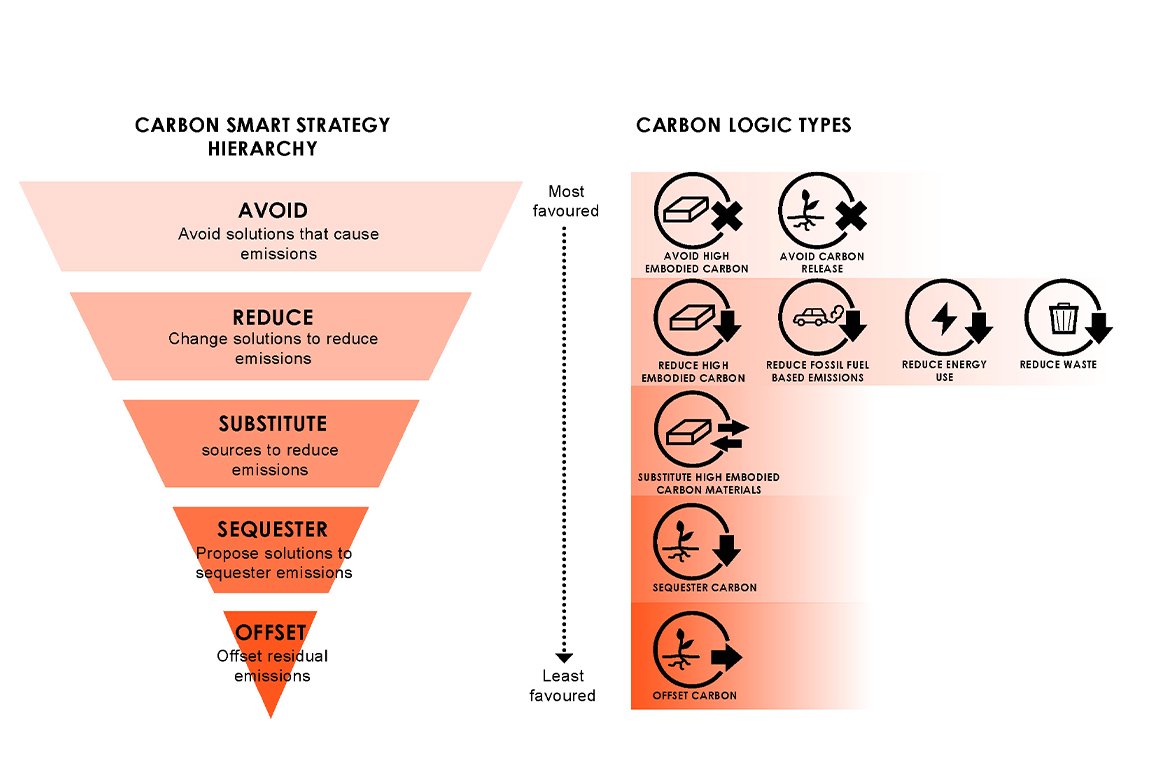
Carbon Logic itself is not a formula or a compliance checklist. Instead, it is a way of explaining why one design decision is more carbon‑smart than another. It looks at the whole system a project sits within and relies on professional judgement and experience. Rather than reducing complex landscapes to a single metric, Carbon Logic supports a clear and defensible line of reasoning that supports accountable decision‑making while leaving room for creativity and design ambition.
The core principles of Carbon Logic
As an accountability lens, Carbon Logic prompts us to question our work more deeply. It challenges us to:
- Avoid carbon release where possible
- Reduce emissions where we can
- Sequester carbon where it makes sense
All this is done while delivering high‑quality, functional, and characterful places. The goal is to align strong design outcomes with genuine climate responsibility.
Designing for climate resilience in Aotearoa New Zealand
This integrated thinking becomes increasingly important as climate risks intensify across New Zealand, with many regions already experiencing greater exposure to flooding, erosion, seismic risk, and extreme weather events. Carbon‑smart design, guided by Carbon Logic, starts from the understanding that landscapes are living, adaptive systems.
While carbon calculations and offsets remain useful tools for understanding overall impact, Carbon Logic deliberately reflects real‑world complexity. It asks how a design can achieve multiple outcomes at once. This might include creating places people want to use, expressing cultural identity, protecting and restoring increasingly rare ecosystems, and delivering landscapes that endure over time.
For many years, carbon reduction conversations have often focused on material choice, followed by offsetting remaining emissions. Carbon Logic reframes this approach. While material choice remains important, greater priority is given to disturbing sites less, ‘right sizing’ designs, considering efficiency over the full lifecycle of the project and protecting existing carbon stores such as soils, mature vegetation, wetlands, and functioning hydrological systems.
Boffa Miskell’s multidisciplinary way of working often enables these outcomes early through spatial planning, and high‑level design that safeguards key site assets from the outset.
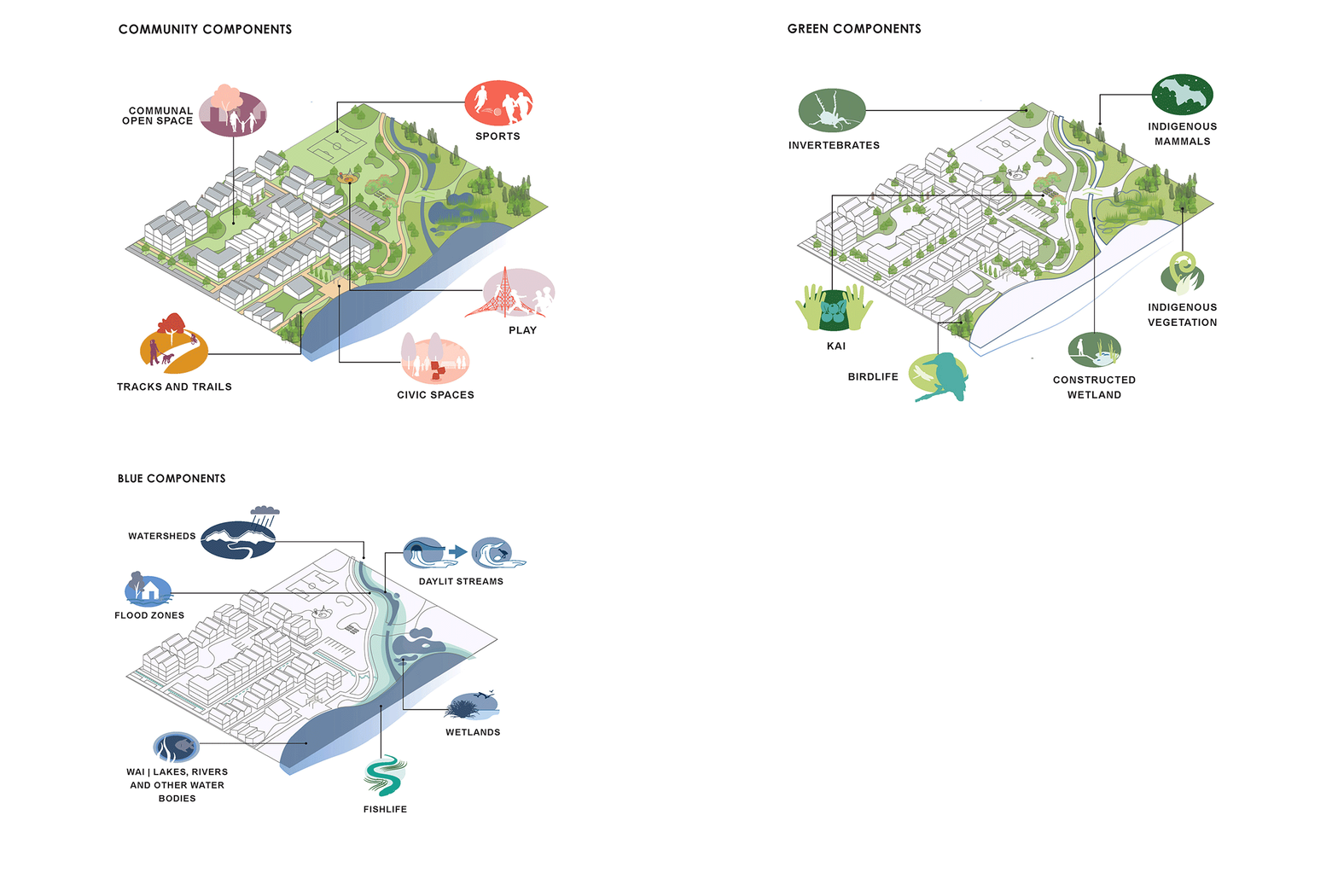
As projects evolve, Carbon Logic supports careful reading of site context and assets, including ecological connections, cultural narratives, water systems, and existing infrastructure. A simple idea sits at the heart of this approach: the most sustainable landscapes are often those that work with existing systems rather than replacing them. Material selection and construction then become opportunities to reinforce earlier decisions through longevity, adaptability, reuse, and thoughtful specification.
Finally, Carbon Logic reminds us that landscapes succeed or fail based on long-term maintenance and operational stages. Without realistic and well‑considered maintenance approaches, even the strongest designs can struggle to deliver long‑term carbon benefits or retain the qualities that made them meaningful in the first place.
Carbon Logic represents a shift from optimisation to responsibility, and from isolated solutions to a deeper understanding of place. It recognises that not every decision will deliver a perfect carbon outcome, but ensures those decisions are informed, transparent, and grounded in long‑term thinking.
By taking this approach, Carbon Logic helps ensure our landscapes give more than they take, now and into the future.