This project is part of the client’s broader regeneration initiative, aiming to revitalise the community through collaboration with Mana Whenua and local residents. The goal is to support social wellbeing, reflect cultural values, and deliver inclusive neighbourhoods that increase housing supply, improve quality and affordability, and strengthen the connection between people and place.
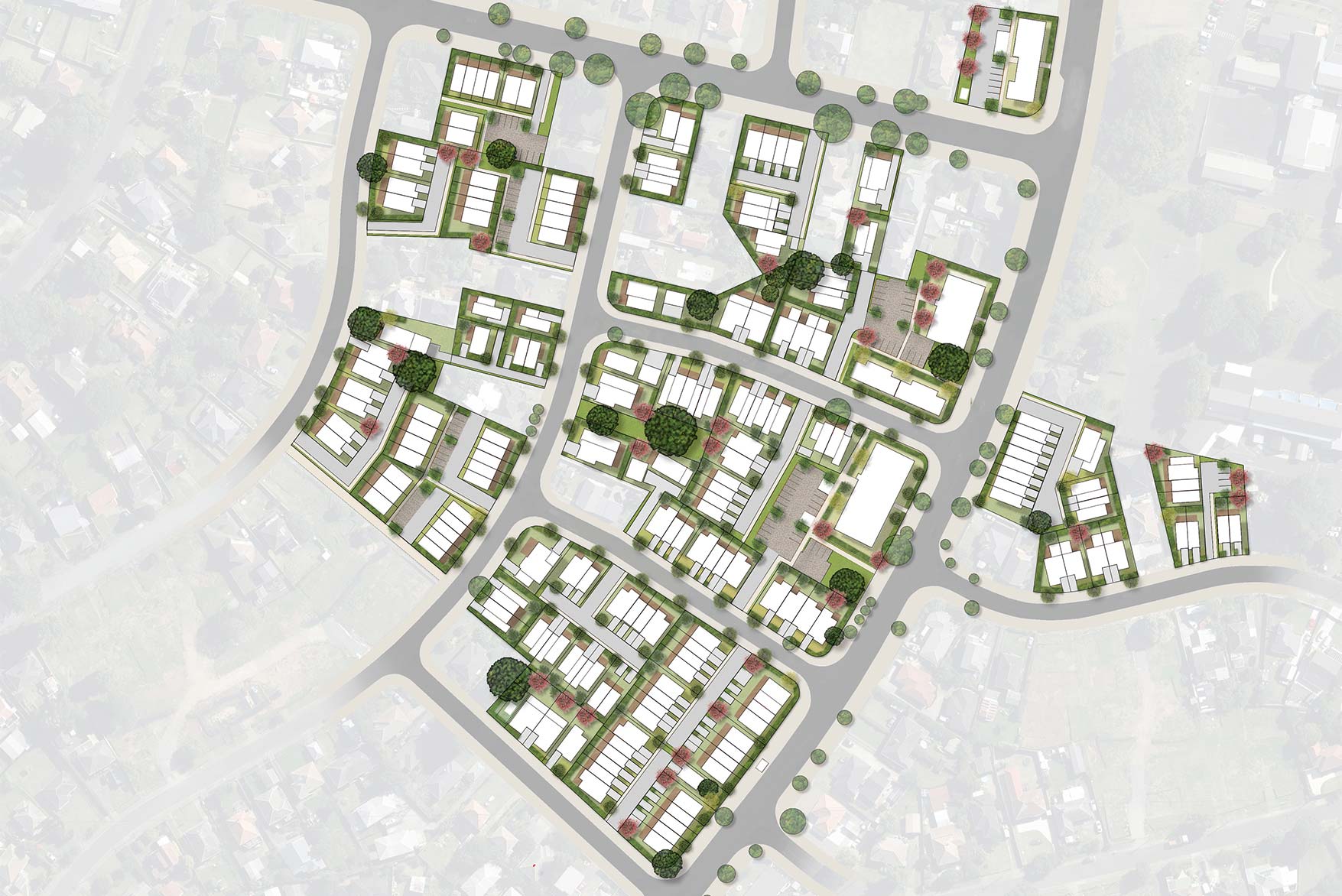
Boffa Miskell was engaged to deliver a comprehensive masterplan that could be staged over time, respond to place, and support housing intensification across a range of housing types. The brief called for a feasibility-focused plan that identified opportunities and constraints, and provided clear spatial direction for the next stages of regeneration.
Through a series of workshops, our team applied expertise in medium-density masterplanning and best-practice urban design to develop a vision for the site. The layout promotes high-quality outcomes, good sunlight access, and effective slope management.
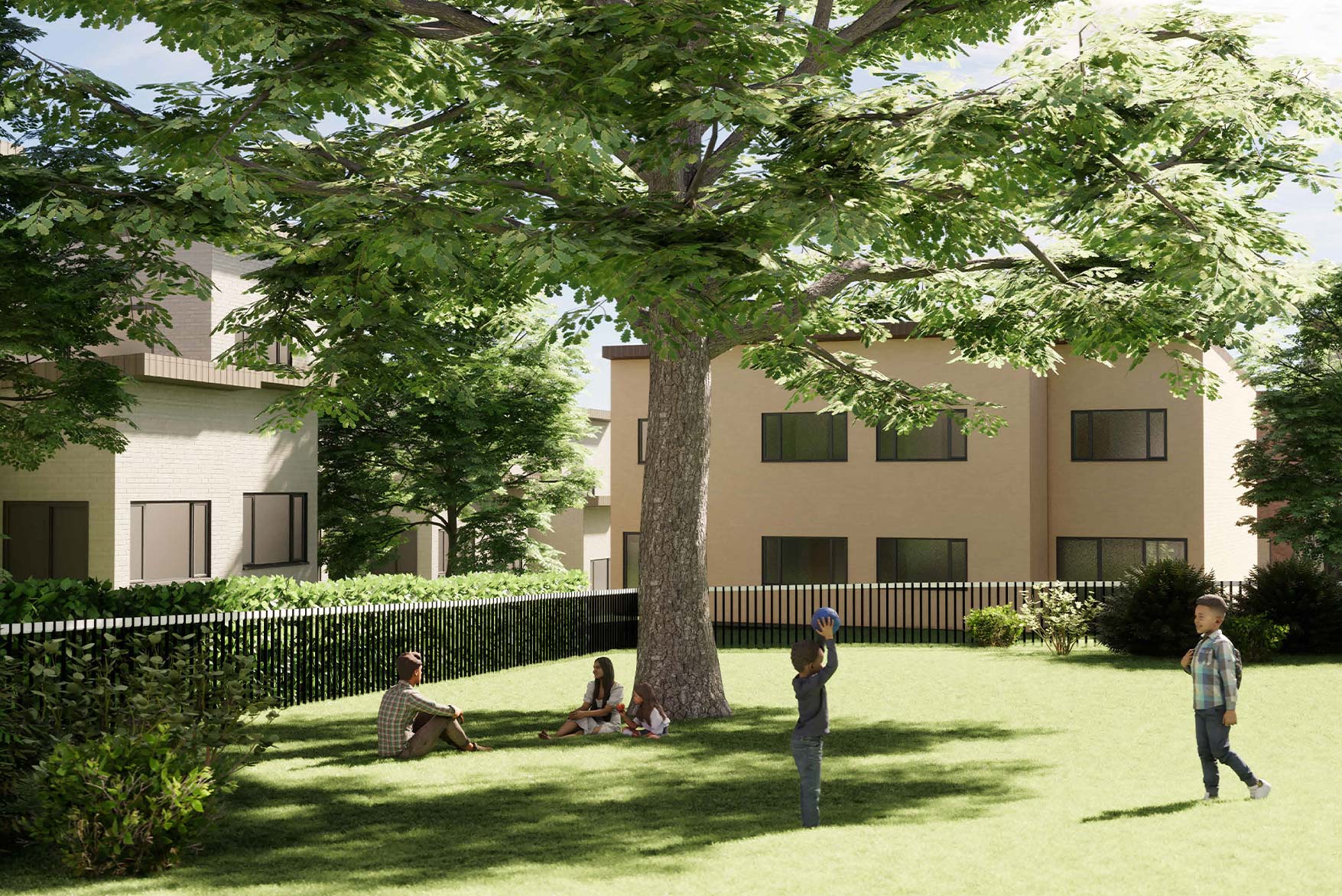
The masterplan avoids vehicle crossings along main streets to support cycleways, retains large canopy trees, and carefully manages building height and bulk along boundaries. North-facing outdoor spaces maximise sunlight, while split-level housing and battering respond to the site’s sloping topography.
The development includes a diverse mix of homes: intergenerational housing for flexible whānau living, accessible homes for residents with mobility needs, and a combination of standalone and apartment-style dwellings to support a vibrant, inclusive community.
Revit was used to develop the design, enabling coordinated modelling, precision, and real-time testing.
Key challenges such as the site’s irregular shape, steep terrain, and the need to retain valued landscape features were addressed through close collaboration with the client and iterative design testing, from early butter paper sketches to detailed 3D modelling.