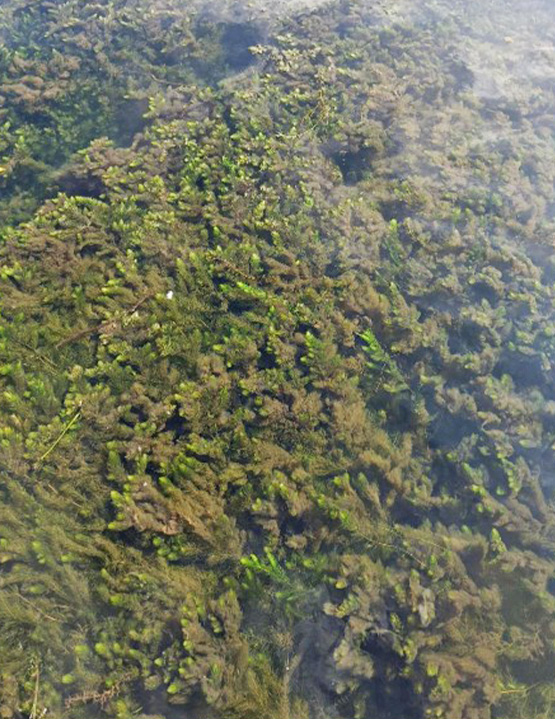
Boffa Miskell has delivered aquatic biosecurity services for Toitū Te Whenua | Land Information New Zealand since 2009, including providing end-to-end management of aquatic biosecurity operations at Lake Karāpiro. In the most recent control season (2025/26), Boffa Miskell coordinated three major control operations across the lake. Boat-based herbicide application was undertaken in December 2025 and February 2026, followed by aerial herbicide application in March 2026. Together, these operations treated 146 hectares of hornwort across the lake.
Hornwort is controlled using a water-safe herbicide applied by boat or helicopter. Areas to be treated are selected based on a variety of factors including field inspections, stakeholder engagement, available funding, and objectives set by the Lake Karāpiro Aquatic Weed Management Group.
The programme operates in a challenging environment. High-summer recreational lake use, rapid weed growth, weather constraints, and differing community views on herbicide use all require careful planning and engagement. More recently, Lake Karāpiro has been invaded by the highly invasive freshwater gold clam (Corbicula fluminea), which poses a significant threat to freshwater ecosystems and water infrastructure, adding another layer of complexity to programme delivery. Contractors are required to follow strict biosecurity measures, including inspection, cleaning and decontamination procedures for vessels, equipment and gear moving between sites.