A transformational civic destination reshaping the western side of the city centre.

The New Zealand International Convention Centre (NZICC) and adjoining Horizon hotel form a major new civic destination in Auckland’s city centre, demonstrating how large-scale buildings can be seamlessly integrated with the established urban form and public realm to enhance urban life.

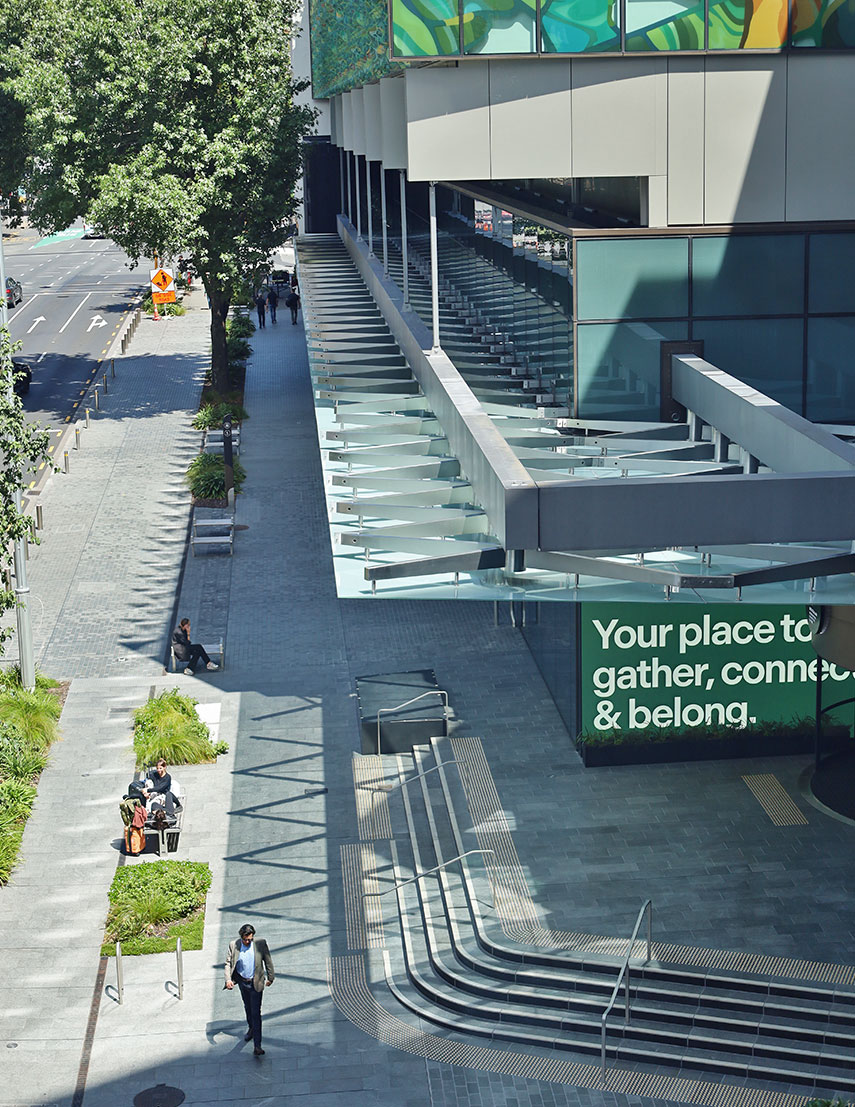
A primary design objective was to ensure the buildings engage outwardly with the city, activating streets and public spaces rather than turning inward as is typical of convention centres. Coordinated design of the built form, ground-floor activities, access, and streetscape delivers a new east–west laneway and arrival plaza that enrich public life across the city block and strengthen pedestrian connections.

Boffa Miskell urban designers and landscape architects formed part of the core project design team for the consenting phase, where core challenges included a tight timeframe to a non-notified consent; incorporation of lane and Hobon Street air bridges; three key public street frontages and no ‘back’ for servicing; and avoidance of traditional vehicle based porte cochere for the conference and hotel facilities. We were also the lead landscape architect for the NZICC site and surrounding streetscape upgrades. Working closely with Woods Bagot, our urban designers helped develop the Urban Design Framework and collaborated with the architects to shape the interface between this landmark development and its wider urban context. This integrated approach ensured the public realm was fundamental to the project’s overall success.
Location

Auckland

Worked with

Warren and Mahoney
Moller Architects
Woods Bagot
Beca
Lightworks
Buro North
Fletcher Construction

Project date

2013 - ongoing

The NZICC responds directly to Auckland’s City Centre Masterplan (CCMP), creating new opportunities for public life and rebalancing streets historically dominated by vehicular traffic. The new east-west laneway and Hobson Street arrival plaza are key components of the CCMP’s “East–West Stitch,” improving connectivity and enhancing the pedestrian experience.

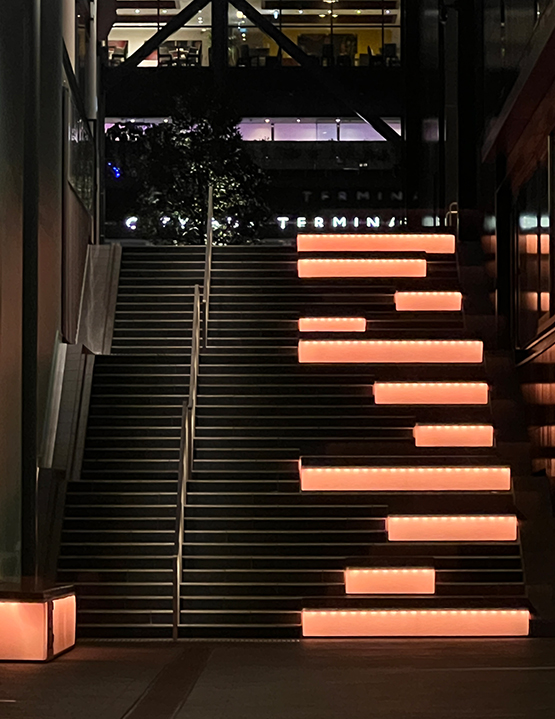
The laneway creates a lively, activated connection between Hobson Street and Nelson Street. A highlight is the site-specific artwork façade by acclaimed Māori artist Peata Larkin, running through the length of the lane. The work shapes how the space is experienced, reflecting themes of movement, layering, and transformation. It provides a striking cultural identity, supports temporary installations and light-based displays, and allows the laneway to adapt over time to events, seasons, and changing patterns of use.

In the public realm design, lighting punctuates a restrained material palette with moments of interest and human scale, while careful detailing and material selection create legible, welcoming spaces that invite people to dwell, gather, and move comfortably through the facility.

Beneath its apparent simplicity, the public realm resolves significant complexity, integrating multiple building and podium elements while addressing level changes, overland flow, traffic movements, and extensive underground servicing. The result is a cohesive, highly functional public space that feels seamless and intuitive for users. It is designed to work on an everyday basis as one of the city’s quality streetscapes whilst adapting to a major gathering, arrival and collection space for the facility’s diversity of events.

The NZICC public realm is the culmination of years of collaboration and design development, delivering a robust, flexible, and enduring urban environment that sets a benchmark for integrating major civic infrastructure with high-quality public space in Auckland’s city centre.

image-5