Shaping a future that restores ecological integrity, honours cultural values, and enhances visitor experiences.

Pūponga Recreation Reserve, at the western edge of Golden Bay, is a culturally and ecologically significant landscape featuring dune lakes, wetlands, salt turf, and remnant forests. Originally acquired by the Crown in 1974 to buffer Farewell Spit Nature Reserve, the 400-hectare site was farmed under a grazing licence until June 2024. It is a popular visitor destination, holds high cultural value for iwi, and has been the focus of restoration efforts by the Department of Conservation (DOC) and community groups.

Our role included landscape planning, ecological assessment, and stakeholder engagement to develop a 10-year and 50-year vision. We worked closely with Healthpost Nature Trust to demonstrate to DOC that the Trust could successfully manage the reserve, aligning with statutory frameworks, iwi aspirations, and community needs.

Location

Nelson Tasman

Project date

2023 - ongoing

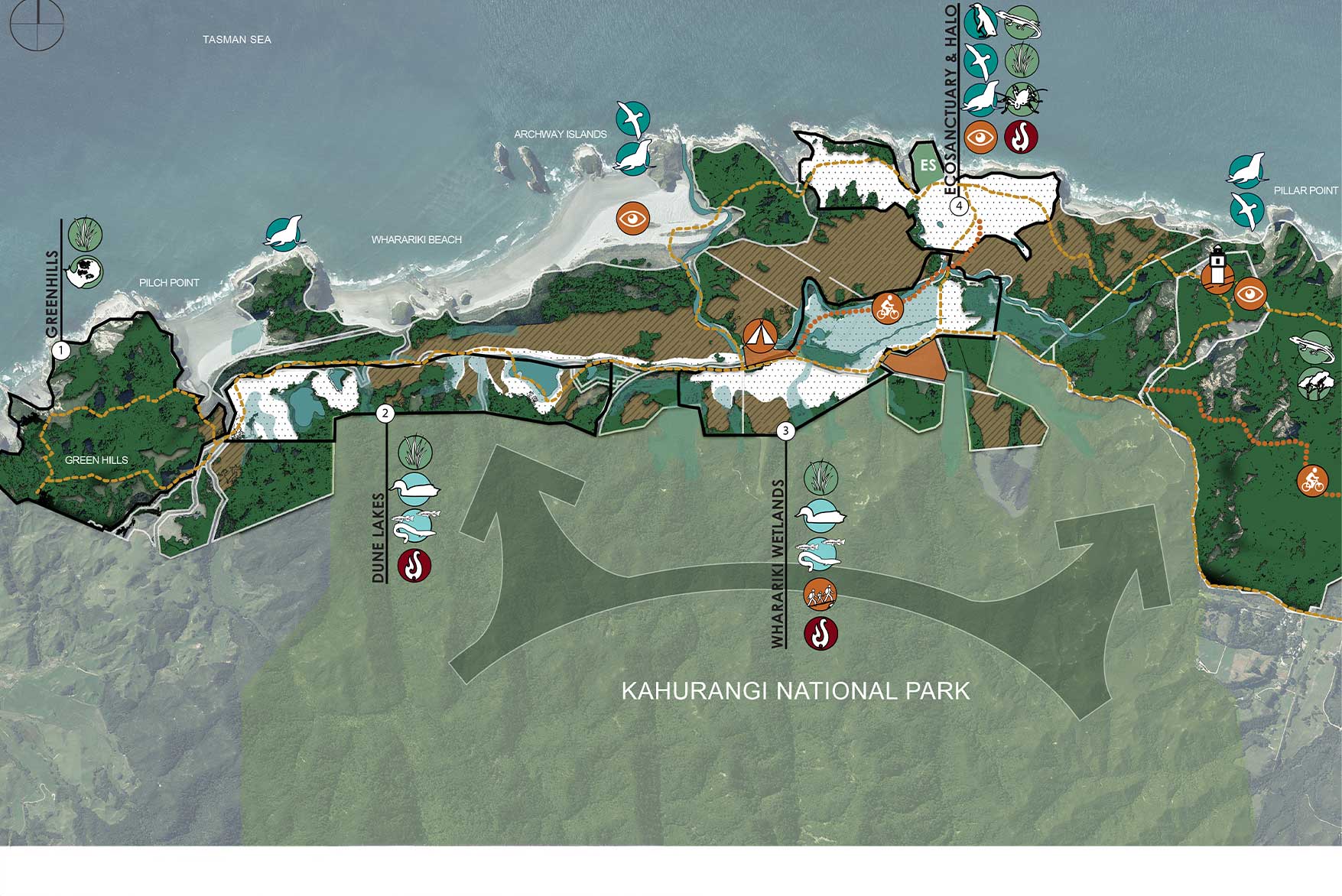
The vision proposes a shift away from grazing, transforming the reserve into a contiguous ecological corridor linking Kahurangi National Park to the Farewell Spit Ramsar site. Desired outcomes include:

  • Passive regeneration across the site
  • Restoration of wetlands and dune lakes
  • Protection of taonga species and habitats
  • Development of visitor hubs and educational experiences
  • Integration of mana whenua values and cultural narratives

Our approach combined spatial planning, ecological mapping, and experiential landscape design. Restoration methodologies were tailored to site conditions, including passive regeneration, targeted planting, and pest control. The vision also introduces a “Front Door” arrival experience to enhance orientation and storytelling.

Restoration opportunities led to a study investigating potential opportunities for carbon sequestration and enhanced biodiversity outcomes within the reserve (Triangle Flat Area).

One of the key challenges was reconciling multiple land-use values, farming, conservation, recreation, and cultural heritage, and presenting a clear, landscape-scale vision. The expiring grazing licence created both urgency and opportunity. Our multidisciplinary expertise enabled us to navigate these complexities and deliver a robust, future-focused plan.

The 10- and 50-year vision laid the groundwork for Healthpost Nature Trust to take over the lease of the reserve by helping convey their aspirations. This project is a strong example of how landscape planning can support multi-benefit outcomes in complex, high-value environments.