Restoring an urban waterway to strengthen ecological health, climate resilience and community connections

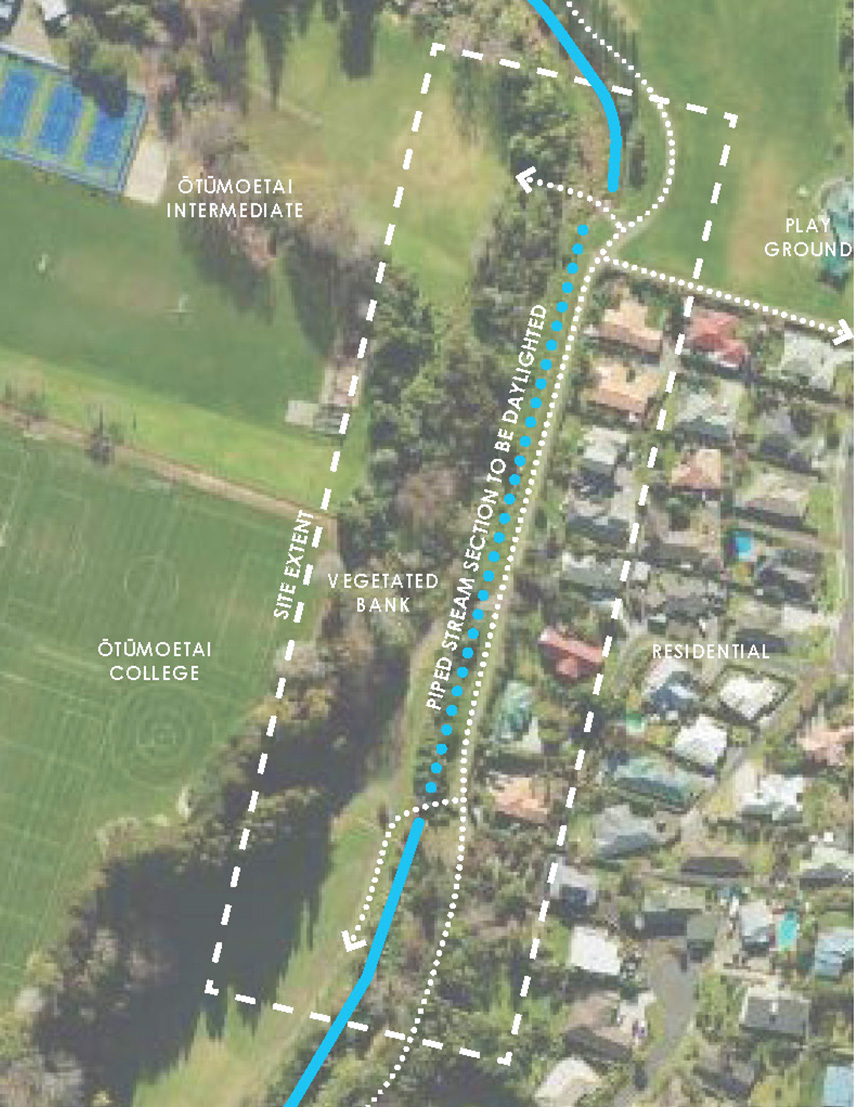
Kākahu Peke Peke Stream runs through Carlton Reserve and the Sherwood Vale Walkway corridor in Bellevue, Tauranga. Located between established residential neighbourhoods, Ōtūmoetai Intermediate and Ōtūmoetai College, the corridor is an important community open space and active transport connection.  

Formerly known as Matua Stream, the waterway once followed a natural drainage corridor before being enclosed within a large stormwater culvert beneath the reserve in the 1980s. The 215-metre culvert has since deteriorated and is at high risk of failure. It also lacks the capacity to accommodate projected stormwater flows and meet contemporary resilience requirements associated with climate change and urban growth.  

The proposed solution will bring the waterway back to the surface, restoring approximately 240 metres of naturalised stream channel. As well as renewing critical stormwater infrastructure, the project offers an opportunity to improve flood resilience, reinstate ecological processes and transform a constrained corridor into an attractive, accessible public landscape.  
Location

Bay of Plenty

Project team

Bryan Sanson
Tessa Milne

Worked with

Vitruvius
SLR Consulting
PDP Pattle Delamore Partners
Tonkin + Taylor

Project date

2025 - ongoing

Boffa Miskell developed the landscape concept for the restored stream corridor, working closely with engineering and ecological inputs from the wider project team. The design integrates stormwater performance, ecological restoration, cultural values, public access and recreation within a coordinated landscape response.  

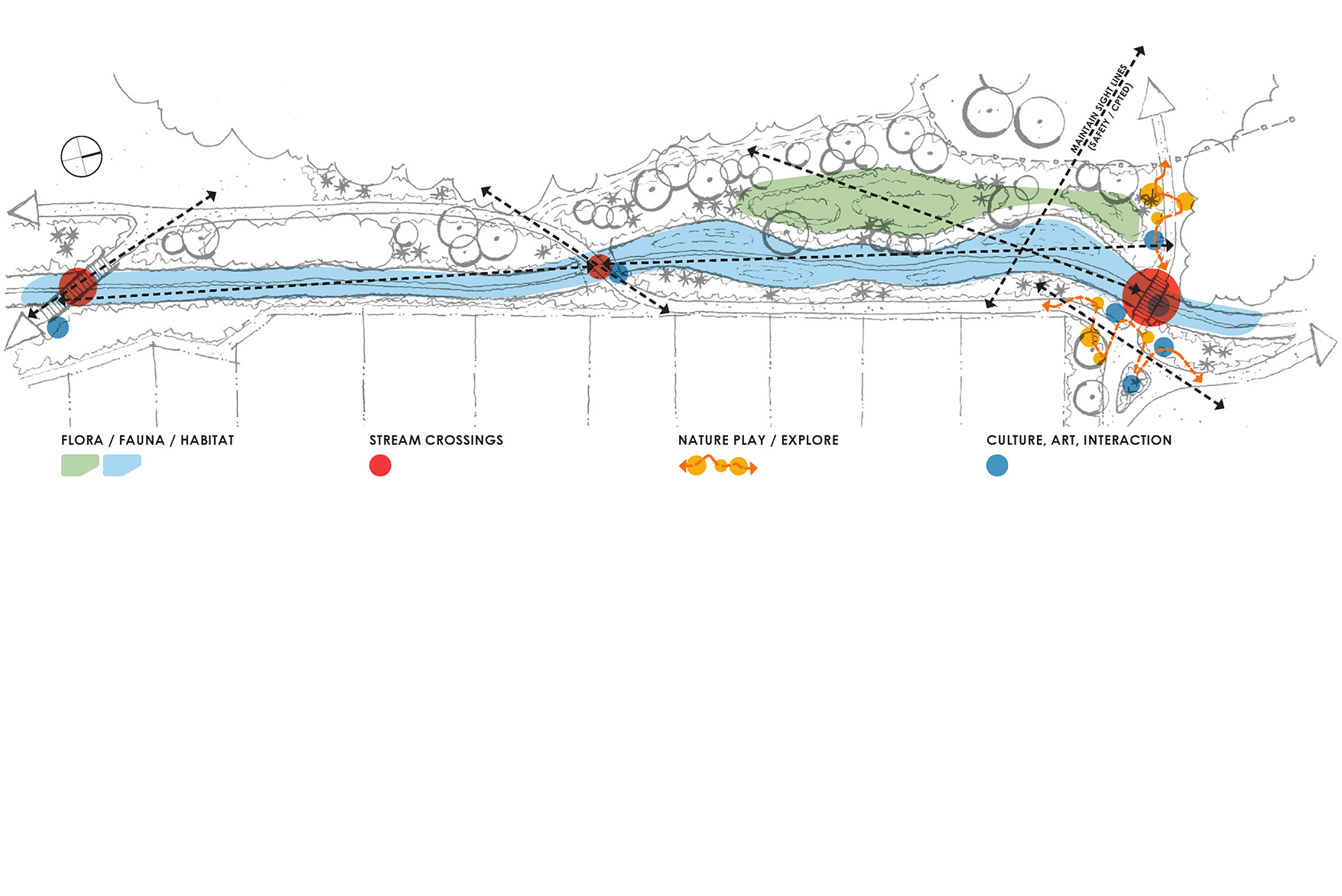
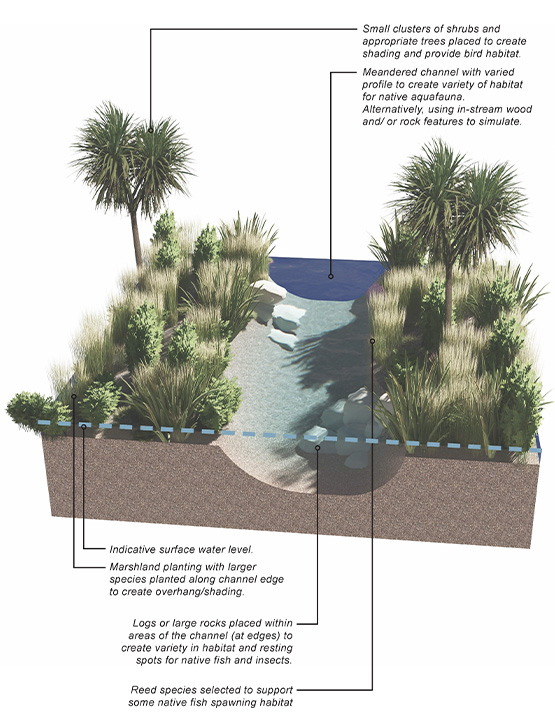
The concept establishes a varied stream profile that uses changes in channel depth, bank form, rocks, logs and overhanging vegetation to create habitat for native fish, insects and other aquatic life. Native planting will shade the waterway, support fish passage and spawning, stabilise stream margins and strengthen biodiversity across several interconnected vegetation zones within the wider gully corridor:

  • realigned stream with riparian margins native planting
  • wetland enhancement with ground contouring and native planting
  • native revegetation and enhancement of the existing escarpment
  • native canopy trees such as kahikatea, rewarewa, tōtara, kōwhai, pūriri and tītoki situated throughout the newly enhanced habitats
  • ensuring the use of lower-growing planting beside pathways to maintain visibility and support safe movement through the reserve by the public and students accessing the two schools neighbouring the reserve.  

Together, these areas will form a diverse and resilient indigenous habitat corridor supporting īnanga spawning, native fish, birds, insects and lizards.  

Realigned shared paths, new bridges, universally accessible connections, seating and stream-viewing areas will make the corridor easier and safer to use, particularly for students, neighbouring residents and reserve users. A central hub at the corner of Carlton Reserve will provide opportunities for rest, informal learning, nature-based play and direct engagement with the restored waterway.

The landscape concept also recognises the cultural significance and mauri of Kākahu Peke Peke. Continued partnership with Ngāi Tamarāwaho will guide cultural expression within the reserve, embedding Te Mana o te Wai principles and recognising the gifted name Kākahu Peke Peke. Indicative opportunities include a pouwhenua, interpretation, bridge patterning, interactive water elements and a traditional anchor-stone sculpture, with the final design to be refined through on-going engagement.

image-5