The Natural Infrastructure Plan has been developed to accompany and support the 30-year National Infrastructure Plan, developed by the Infrastructure Commission.

Aotearoa New Zealand’s long-term economic prosperity and national resilience fundamentally depend on the health and performance of natural infrastructure.

This Natural Infrastructure Plan is New Zealand's first coordinated, long-term plan to embed, maintain, and enhance the natural infrastructure that underpins the country’s enduring prosperity. New Zealand’s economy is intrinsically linked to the environment, with 70% of our exports reliant on natural resources; investing in resilience and natural capital is not a trade-off - it is a win-win.
Location

National

Project team

Sam Parsons

Worked with

Beca
Nature Positive
West Nine Consulting

Project date

2025 - 2026

Working alongside the Aotearoa Circle and its supporting members, Boffa Miskell led the technical research and development for the Natural Infrastructure Plan to acknowledge and understand the role and multiple benefits of natural infrastructure in New Zealand.

The aim of conducting this technical research and development was to ensure that the Natural Infrastructure Plan appropriately targeted and appealed to the nature-related impacts, dependencies, risks and opportunities that are most important to the New Zealand economy.

To achieve this, we conducted a deeper analysis of the economic dependencies and growth opportunities presented by natural infrastructure for New Zealand’s key economic sectors - including the bioeconomy, tourism, towns and cities, and the blue economy.

Working at the intersection of policy, climate change, and nature, we delivered practical, place-based insights into how Natural Infrastructure can be applied and scaled across New Zealand to address environmental challenges.

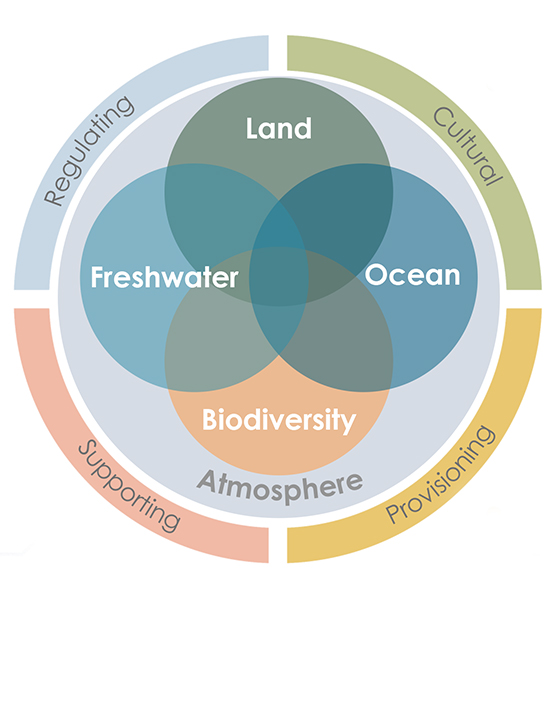
The Natural Infrastructure Plan is the first of its kind in New Zealand. Its purpose is to help New Zealand recognise natural systems as part of the country’s infrastructure system, rather than treating them as an environmental add-on or simply a nice-to-have.

image-5