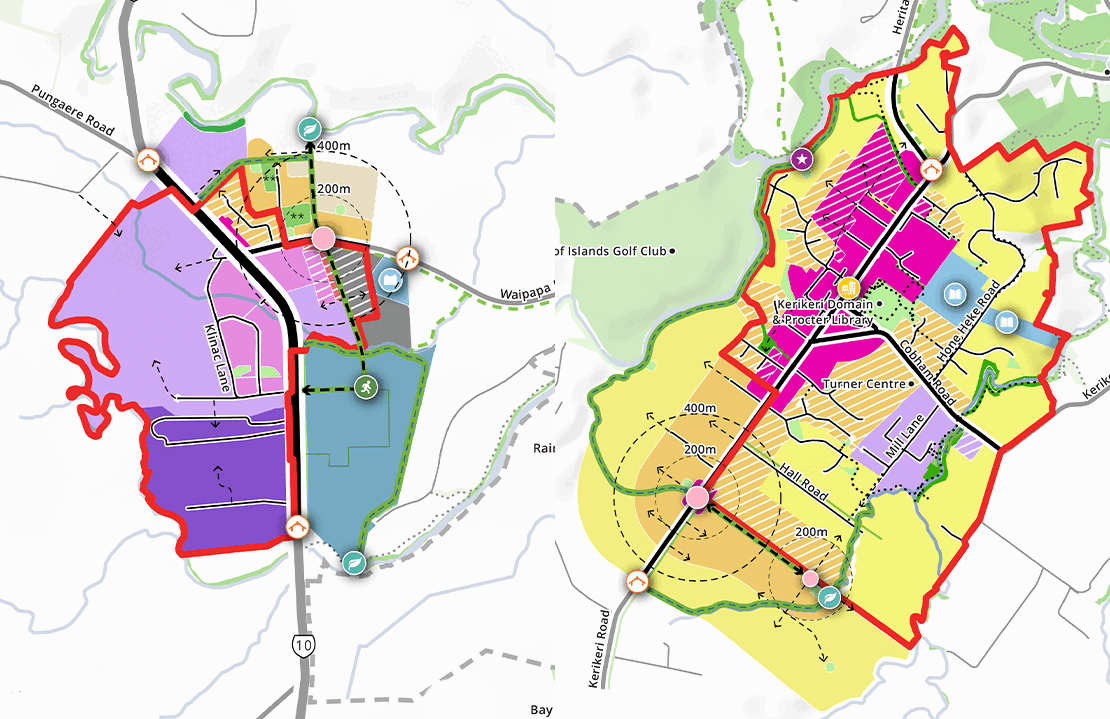
Boffa Miskell provided planning and project coordination services to ensure that the project was delivered on time and within budget. Boffa Miskell also led the urban design inputs to the Te Pātukurea Kerikeri Waipapa Spatial Plan, shaping the urban design framework for two rapidly growing towns, ensuring that future growth and development are well‑planned, connected, and aligned with community aspirations.
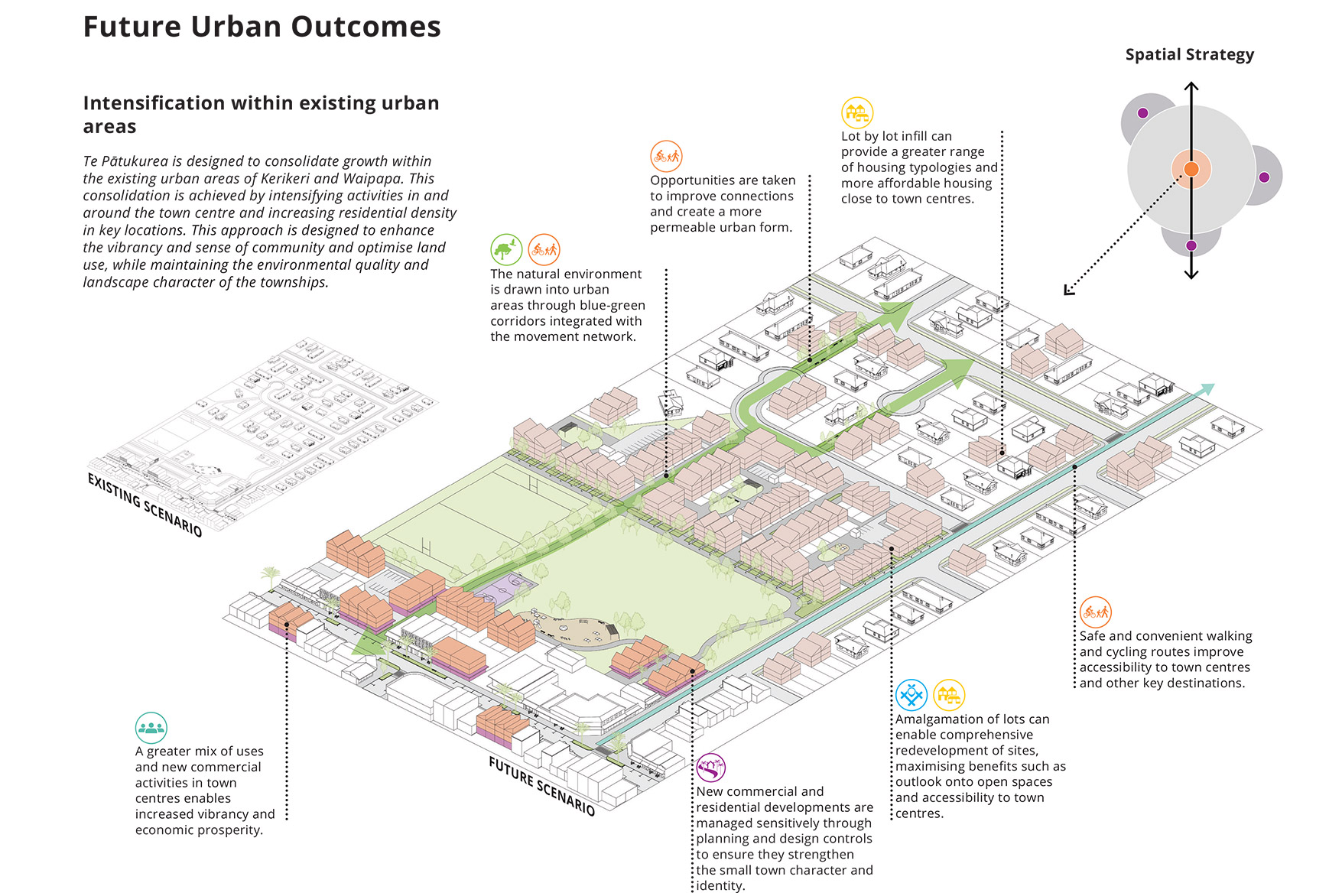
Our work included analysing existing urban form, exploring options for accommodating growth, and preparing a suite of maps, diagrams, and graphic outputs to clearly communicate future development patterns. We examined the relationship between Kerikeri and Waipapa and articulated key principles for managing change, including achieving a more compact urban form, enabling residential intensification, and supporting the creation of a viable, vibrant town centre.
The Te Pātukurea Kerikeri Waipapa Spatial Plan addresses managing significant growth pressures, preventing excessive urban sprawl, efficiently using existing infrastructure, and ensuring that new development contributes to walkable, well‑connected neighbourhoods. Developing preferred growth scenarios required detailed urban design analysis and multidisciplinary input through a structured multi‑criteria evaluation. A core principle of the spatial plan is that most growth should occur within the existing urban footprint to create a more sustainable pattern of development over the next 30 years.