SHARE


Spatial planning isn’t a shiny new import or a creature of reform, says planner Stephanie Styles. It’s the way councils have always joined the dots between land, infrastructure, environment, community aspirations, and the funding necessary to achieve outcomes – and right now, that integrated approach has never mattered more.

Spatial planning is gaining momentum in Aotearoa. It was a feature of the now-repealed Spatial Planning Act (2023) and is in reform papers, ministerial fact sheets, agency strategies and conference agendas. But here’s the truth most people in local government already know: spatial planning didn’t arrive in New Zealand with a ministerial press release. It is a core part of what councils have always done; taking a long-term view of directing where a place should grow, what must be protected, and how changes are staged.
The question is how to do it well enough to match the scale of the problems in front of us.
Why this matters now: Councils in the squeeze
Across New Zealand, councils are being asked to deliver more, faster, with less margin for error. Urban areas need land and capacity for housing and jobs while producing well-functioning environments that are safe, accessible, inclusive and supportive of quality of life. Regions need productive land, special natural areas need protection, and communities need open spaces and places for recreation.
At the same time, councils face the costs of major infrastructure renewal, affordability constraints (limits on lending and rates increases), and the need to reduce exposure to natural hazards and climate impacts. Local Government New Zealand has been blunt about climate adaptation and retreat funding issues becoming unavoidable in long-term planning.
When pressures collide, spatial planning can bring integrated thinking. It lets councils step back, look across a whole geography, and make coherent choices about where change should go, what form it should take, and when and how to direct change and growth. It also provides a catalyst for integration with other council functions and funding decisions.

Spatial planning in New Zealand: Old craft, new urgency
Spatial planning isn’t a reform buzzword. It’s councils doing what they’ve always done.
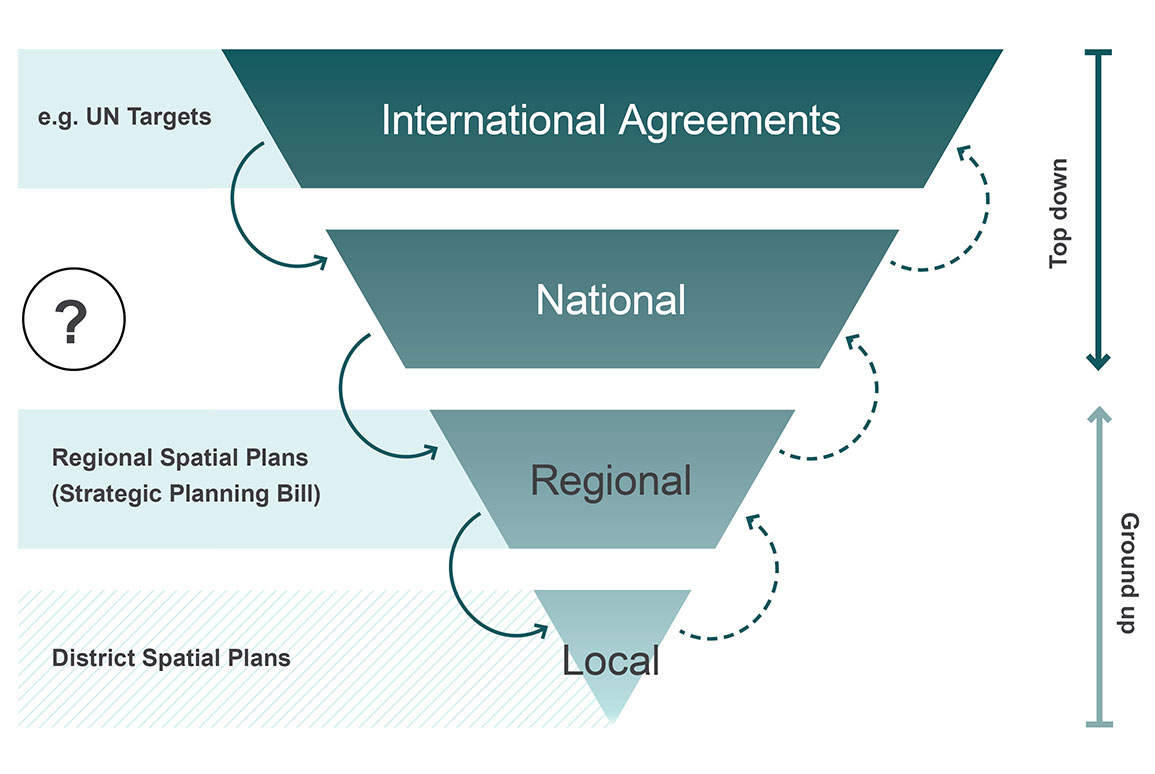
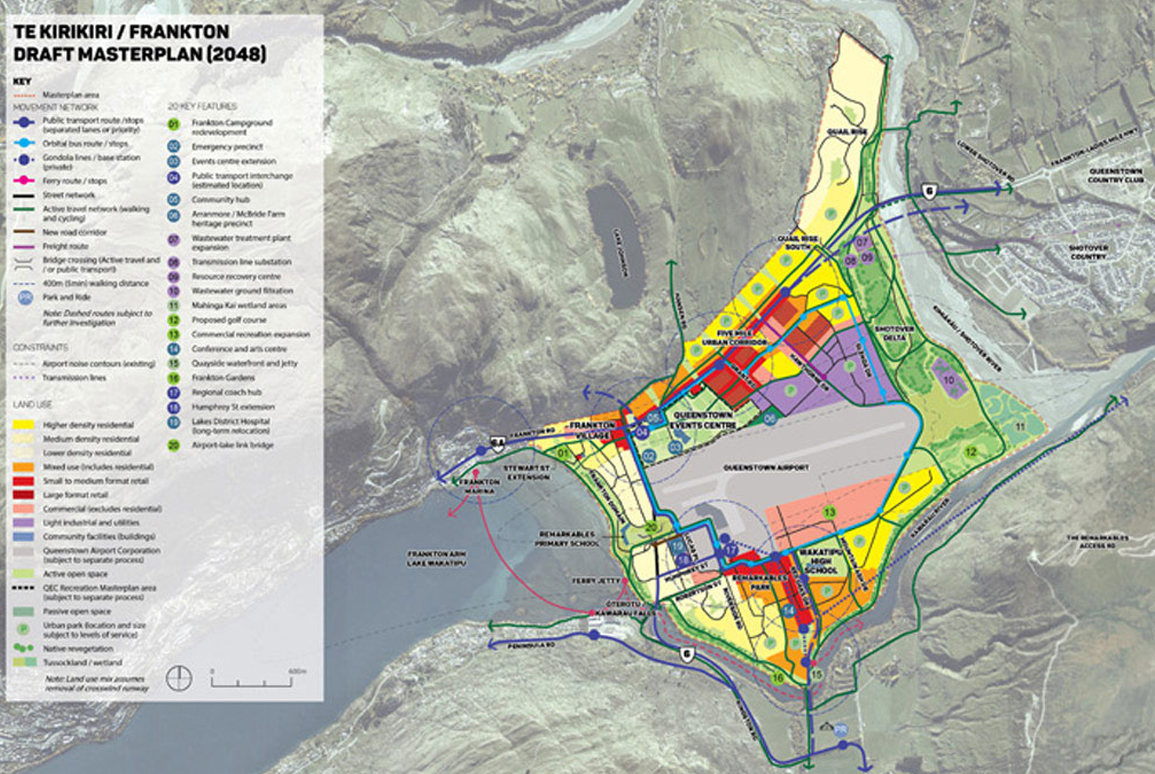
It is future-focused, place-based decision-making. It uses evidence, mapping, and community values to identify opportunities for future land use and infrastructure integration, along with constraints that should shape it. It operates at different scales: a town centre masterplan, a district growth strategy, or a region-wide spatial plan.
It happens through growth strategies, structure plans, catchment plans, transport networks, reserve plans and district plan reviews. The underlying job is constant: join the dots early so statutory plans, infrastructure programmes and funding decisions pull in the same direction.
What has changed is the urgency. Spatial planning is no longer about polishing a vision document. It’s about helping councils:
- Keep ahead of growth instead of reacting to it;
- Avoid locking in high-risk hazard exposure;
- Coordinate growth with supporting infrastructure;
- Protect productive land and special areas while enabling housing and community growth; and
- Stage infrastructure delivery so ratepayers aren’t paying for stranded assets.
For communities, developers and investors, spatial plans provide certainty and direction. Knowing what is intended to go where can unlock development potential, stimulate growth and reassure residents that our towns, districts and regions are growing wisely.
How spatial planning sits alongside the Resource Management Act and Reform
The Resource Management Act has been our main statutory planning tool for over 30 years, and now we are entering a new phase under reform. Spatial planning doesn’t replace legislation; it strengthens it. Under the proposed structure, a regional spatial plan will provide the strategic “why and where” that informs the “how” in plan provisions, consent pathways and infrastructure agreements.
Reform has made spatial planning more visible and aims to give regional spatial planning stronger statutory weight. Councils already doing robust spatial planning are better positioned for what reform requires, because they’ve done integration work early.

Te Tiriti partnership and community involvement
Layered throughout spatial planning is the expectation that councils will work in genuine partnership with iwi , giving effect to Te Tiriti o Waitangi and local kaupapa; not as an add-on but as a driver of how a place develops at the stage when big choices are still open.
Durable plans are those co-designed with mana whenua from the outset.
Kaikōura’s 30-year spatial plan, built alongside Te Rūnanga o Kaikōura after earthquake and pandemic shocks, is an example of this resilience and clarity.
In Queenstown Lakes, spatial and blue-green network planning has been built around Kāi Tahu values and Ki Uta Ki Tai thinking, integrating ecological resilience and cultural narratives with growth decisions.
Spatial plans will focus the direction for everyone, so involving the whole community throughout the process builds knowledge and buy-in. Good spatial planning makes trade-offs visible, so communities understand the choices made and own the pathway forward.
The best results happen when mana whenua and communities help to shape:
- The values base: what matters, and why;
- The evidence lens: what counts as a constraint or opportunity; and
- The options: what ‘good’ really looks like.
Spatial planning provides a shared table for discussions to take place, and Councils that treat Te Tiriti partnership and community involvement as core to the process make better, more durable plans.
What good looks like
The difference between a plan that sits on a shelf and one that changes outcomes usually comes down to:
- A clear geographic story and evidence base. Start with an honest read of land uses, demographics, housing need, infrastructure capacity, hazards, biodiversity, cultural landscapes and market trends, then map how they interact. This is where Councils’ data and local knowledge are valuable, and where specialist support can add speed and rigour.
- Integration across disciplines. Bring all parts of the puzzle into one joined-up process. That multidisciplinary approach is exactly how Councils avoid solving one problem while creating another.
- Real choices tested with communities. Set out options, test scenarios, and be transparent about decisions. Don’t pretend there are no trade-offs
- A practical implementation and staging pathway. A spatial plan is only as strong as its links to district and regional plans, long-term plans, infrastructure and transport programmes.
- A plan councils can use. If decision-makers can’t see themselves using a plan at the council table, it won’t stick. Strong mapping, clear narrative, and priority actions matter more than pages of theory.

Exemplar Spatial Plans
Queenstown Lakes’ approach, grounded in Kāi Tahu values and Ki Uta Ki Tai thinking, shows how cultural worldviews can reshape infrastructure and growth choices.
Tasman District Council’s Richmond spatial and intensification plan focuses on accommodating growth within the existing footprint, protecting productive land and reducing climate risk.
Mackenzie District used extensive engagement to map constraints, identify opportunities, and steer planning choices for the next 30 years.
Kaikōura District Council’s spatial plan guides land use and infrastructure investment, co-developed with Te Rūnanga o Kaikōura and the community.
Behind each of these sits a familiar pattern: Councils doing the courageous, integrative work; and specialist teams providing inputs to make that work faster, clearer and more defensible.
Boffa Miskell’s role across the country has been to provide expert advice and assistance – constraints analysis, technical assessment, engagement facilitation, cultural advisory, planning expertise, mapping, and implementation alignment – so Councils can make integrated calls with confidence and at-pace.
Where to next: practical steps for Councils
Some councils are progressing spatial planning to position themselves ahead of Resource Management reform, using the process to understand communities’ needs and assist with internal trade-offs. With this in mind, councils can take these actions now:
Identify key issues: Be clear about whether the priority is housing supply, infrastructure sequencing, hazard retreat, or centre revitalisation. Consider what we know is coming through the reforms but also what matters to your community.
Map constraints and opportunities: Use this time wisely to get ahead of time pressures that are likely to come once reforms are in place. Gather evidence, technical inputs, community engagement and mana whenua perspectives.
Bring delivery teams in: Spatial planning fails when owned only by policy teams. Involve infrastructure, transport, finance, parks, community development and economic teams from day one.
Test options early: use workshops, scenarios and plain-language conversations. Don’t wait for formal submissions on a draft plan to have the big conversations.
Treat reform as tailwind, not timetable: Councils with clear, evidence-based spatial direction for their local area will be ahead of the game when it comes to the bigger integration required at a regional spatial plan level.
Spatial planning is local government doing what it does best: making long-term, place-based choices in the public interest, before the heat of the moment takes those choices away.
Councils that lean in now will shape their growth, protect what matters, and bring communities with them.
So, here’s the challenge to local government leaders: own spatial planning as your job, not Wellington’s gift.
Get your constraints and opportunities on a map. Bring your delivery teams, communities and mana whenua in early. And start the journey now, because reform or no reform, the future turns up either way.